The Instant That Time Stopped: When a 700°C Pyroclastic Wave Locked Pompeii in Eternity
The primary force behind this phenomenon was not lava, as commonly imagined, but a deadly and invisible killer: a pyroclastic flow.

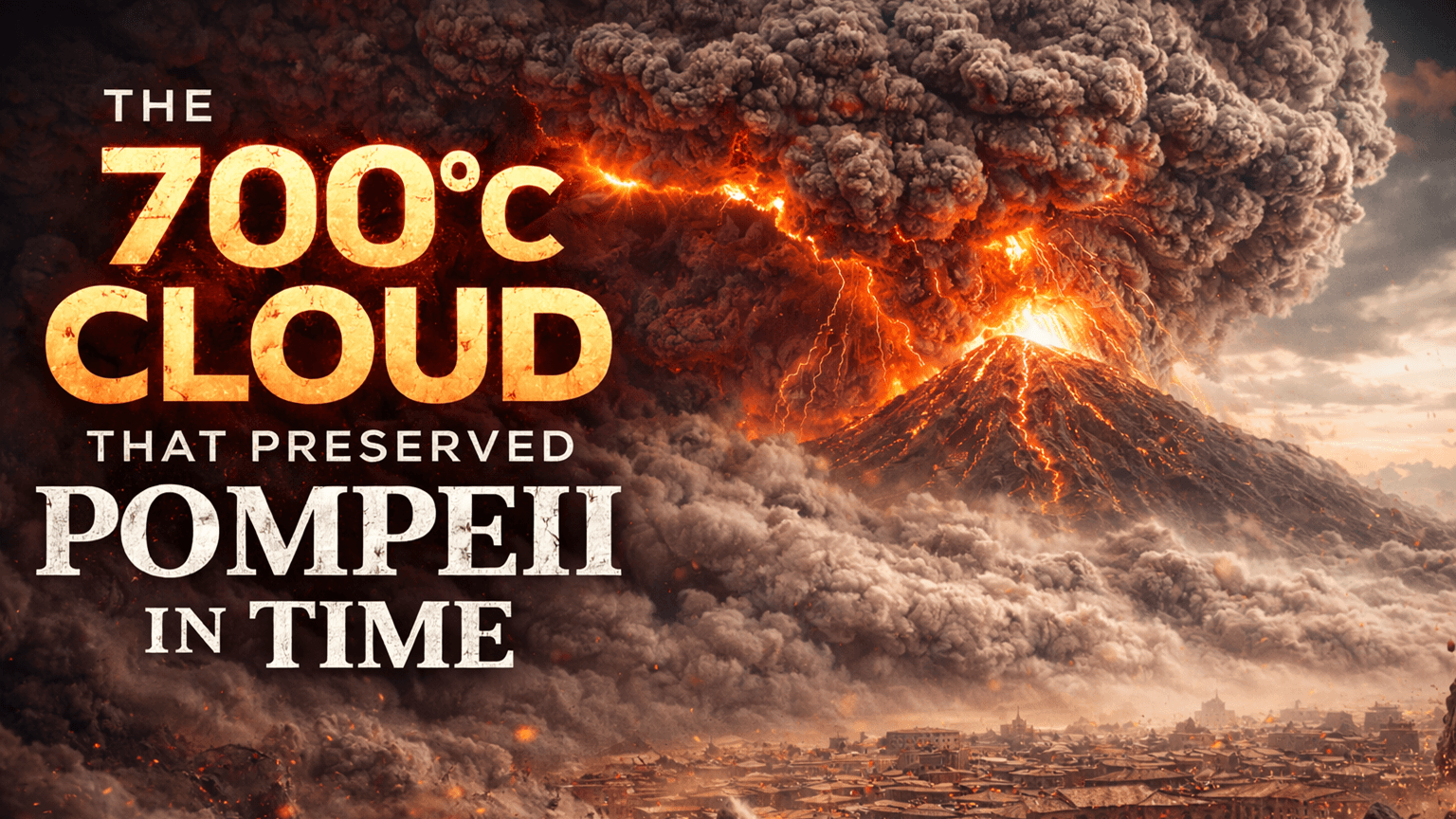
In 79 AD, the thriving Roman city of Pompeii was abruptly and catastrophically erased from the map by the eruption of Mount Vesuvius. What makes this event uniquely haunting is not just the destruction, but the extraordinary preservation of human life in its final moments. The primary force behind this phenomenon was not lava, as commonly imagined, but a deadly and invisible killer: a pyroclastic flow.
This fast-moving avalanche of superheated gas, ash, and volcanic debris reached temperatures of up to 700°C (1,292°F), instantly overwhelming the city and its inhabitants. Within seconds, life ceased, yet paradoxically, this same force preserved Pompeii in remarkable detail, creating a time capsule that continues to inform science, archaeology, and history nearly two millennia later.
What Is a Pyroclastic Flow?
A pyroclastic flow is one of the most destructive phenomena produced by volcanic eruptions. It consists of a dense, ground-hugging current of hot gases, volcanic ash, and rock fragments that travels at extreme speeds.
- Temperatures can exceed 700°C (1,292°F)
- Speeds can reach up to 700 km/h (435 mph)
- Composition includes ash, pumice, gas, and volcanic debris
- Capable of incinerating everything in its path instantly
- Often travels faster than humans can perceive or react
Unlike lava flows, which move relatively slowly, pyroclastic flows are sudden, silent, and unstoppable. They are often the deadliest aspect of a volcanic eruption.
The Timeline of Destruction
The eruption of Mount Vesuvius began on August 24, 79 AD (though some modern evidence suggests it may have occurred later in the year). The initial phase involved a towering column of ash and pumice rising into the atmosphere.
Over the next 18–24 hours:
- Ashfall accumulated up to 2.8 meters (9 feet) deep
- Roofs began collapsing under the weight of volcanic debris
- Many residents fled, but thousands remained trapped
Then came the most lethal phase: the pyroclastic surges and flows. These waves descended rapidly from the volcano, engulfing Pompeii and nearby settlements.
The 700°C Cloud: Instant Death
When the pyroclastic flow reached Pompeii, it did so with devastating efficiency. Scientific analysis of victims’ remains suggests that death occurred almost instantaneously due to extreme heat.
- Exposure to temperatures above 500°C causes immediate organ failure
- Soft tissue vaporizes within seconds
- Brain tissue can boil and expand rapidly, causing skull fractures
- Muscle contraction from heat leads to characteristic “pugilistic posture”
Research published in modern forensic studies indicates that many victims died before they could even register pain. The heat wave effectively stopped biological processes in less than a second.
How Destruction Led to Preservation
Ironically, the same forces that destroyed Pompeii also preserved it. The layers of ash and volcanic material created an airtight seal over the city.
- Ash layers reached depths of 4–6 meters (13–20 feet)
- Buildings remained structurally intact beneath debris
- Organic materials left voids that could later be cast in plaster
- Wall paintings, graffiti, and artifacts were preserved in situ
This preservation allowed archaeologists to reconstruct daily Roman life with unparalleled accuracy.
Human Stories Frozen in Time
One of the most haunting aspects of Pompeii is the preservation of its inhabitants in their final moments. Plaster casts made from voids in the ash reveal people in lifelike positions.
- Families huddled together for protection
- Individuals shielding their faces from ash
- Animals trapped in stables or attempting escape
- Jewelry and personal belongings still in place
These casts provide not only physical evidence but emotional insight into the final seconds of Pompeii’s citizens.
Modern Scientific Insights
Advances in archaeology, volcanology, and forensic science have deepened our understanding of the Pompeii disaster.
- X-ray analysis reveals internal bone structure and health conditions
- DNA studies identify familial relationships among victims
- Chemical analysis detects iron residues from vaporized blood
- Thermal modeling reconstructs heat distribution patterns
A 2020 study found evidence that victims’ brains were vitrified—turned into glass—due to rapid cooling after extreme heating, a rare and extraordinary phenomenon.
Key Statistics
- Estimated population of Pompeii: 11,000–15,000
- Estimated deaths: 2,000+ (many more in surrounding regions)
- Height of eruption column: up to 33 km (20 miles)
- Duration of eruption: approximately 24 hours
- Number of pyroclastic surges: at least 6 major waves
- Temperature range: 300°C to 700°C+
- Speed of pyroclastic flows: up to 700 km/h
How Pompeii Compares to Other Eruptions
While the eruption of Mount Vesuvius in 79 AD is one of the most famous, it is not unique in its destructive power.
- Mount St. Helens (1980): pyroclastic flows reached speeds of 480 km/h
- Krakatoa (1883): explosion heard 3,000 miles away
- Mount Pelée (1902): destroyed Saint-Pierre in minutes, killing ~30,000
However, Pompeii stands apart due to the level of preservation and the insights it provides into ancient life.
Lessons for Modern Society
The tragedy of Pompeii continues to inform modern disaster preparedness and volcanic monitoring.
- Importance of early warning systems
- Need for evacuation planning in volcanic regions
- Understanding pyroclastic flow behavior
- Public education on volcanic hazards
Today, Mount Vesuvius remains an active volcano, with millions of people living nearby. The lessons of Pompeii are more relevant than ever.
Conclusion
The 700°C cloud that engulfed Pompeii was both a destroyer and a preserver. In mere seconds, it ended thousands of lives, yet it also created one of the most detailed archaeological records in human history.
Pompeii stands as a powerful reminder of nature’s immense force and the fragility of human life. At the same time, it offers an extraordinary window into the past, allowing us to witness the final moments of a city frozen in time.
Through science, archaeology, and continued exploration, the story of Pompeii continues to unfold, ensuring that the voices of its people are never truly lost.
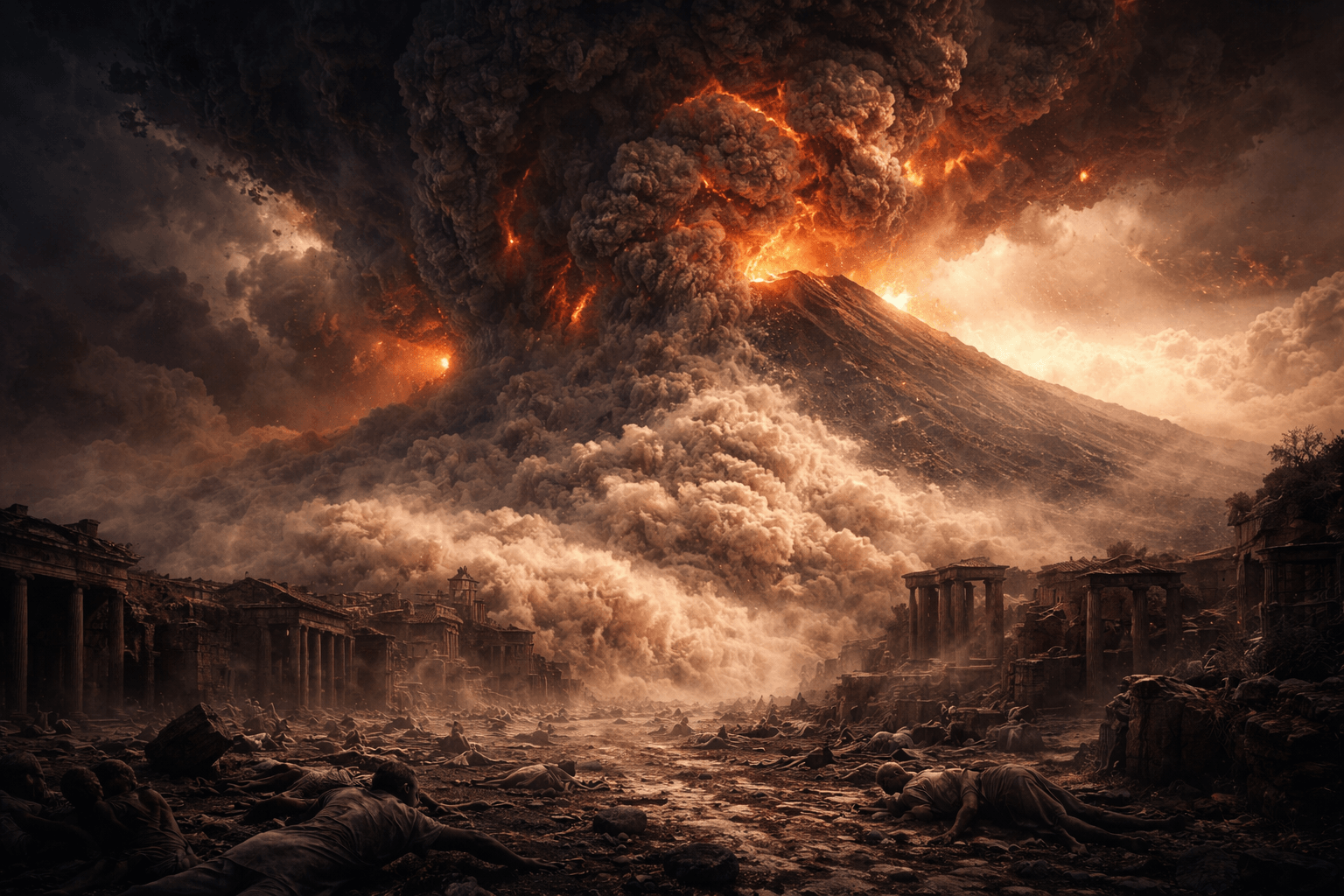
The destruction of Pompeii remains one of the most intensively studied natural disasters in human history, not only because of its sudden and catastrophic nature, but because of the unprecedented level of preservation it achieved. The pyroclastic density currents that swept across the city functioned as both an agent of annihilation and a mechanism of archival precision, sealing architecture, artifacts, and human forms beneath layers of ash that hardened into a protective shell. Modern interdisciplinary research—spanning volcanology, archaeology, forensic anthropology, and materials science—continues to extract new insights from the site, including thermal exposure thresholds, rapid tissue degradation processes, and even molecular remnants of organic life.
These findings contribute directly to present-day volcanic risk assessment models, especially for populations living in proximity to active stratovolcanoes like Mount Vesuvius. With millions still residing in the surrounding region, Pompeii is not merely a relic of the past but an active case study in hazard preparedness, emergency planning, and the necessity of early warning systems. The silent forms captured in ash serve as enduring evidence of the speed at which nature can act, and the importance of translating historical knowledge into modern resilience strategies. More at Statuslink